Simpler Recycling: Streamlining Waste Management Practices in the UK
The UK is embarking on a transformative journey in waste management with the introduction of the Simpler Recycling initiative by the Department for Environment, Food & Rural Affairs (Defra). Aimed at standardising recycling practices across England, this reform seeks to simplify the recycling process by ensuring consistency in the materials that can be recycled, whether at home, work, or school. By 2026, the initiative promises to unify the collection of dry recyclables such as paper, card, plastic, metal, and glass into a single bin, making recycling more convenient for households and businesses alike.
Implementation and Timeline
One of the standout features of the Simpler Recycling initiative is the scheduled implementation of weekly food waste collections for most households by 2026. This move is set to harmonise recycling practices across the nation, alleviating the confusion over what materials can be recycled in different regions. The initiative not only aims to increase recycling rates but also to reduce environmental impact by ensuring that recyclable materials are processed efficiently.
Impact on Material Recovery Facilities (MRFs)
Material Recovery Facilities (MRFs) are at the heart of this transition, poised to experience both benefits and challenges. The new legislation offers a potential lifeline for councils dealing with budget constraints, as it encourages investment in advanced sorting technologies. These technologies are crucial for enhancing the quality of output materials and meeting the updated recycling standards. However, MRFs must also navigate potential obstacles, such as increased contamination and associated costs, which may arise during the adaptation to the new system.
The Role of Mass Balance Modelling
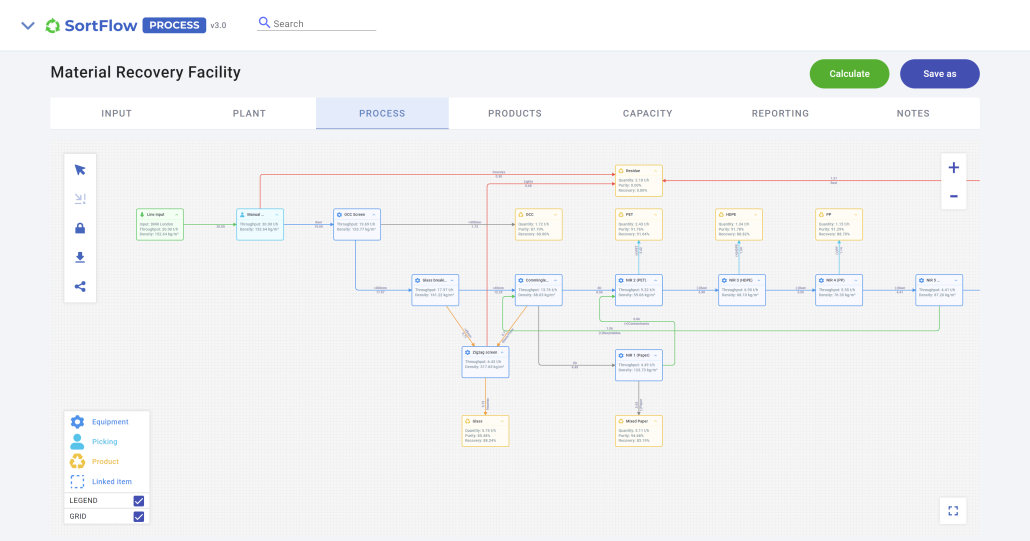
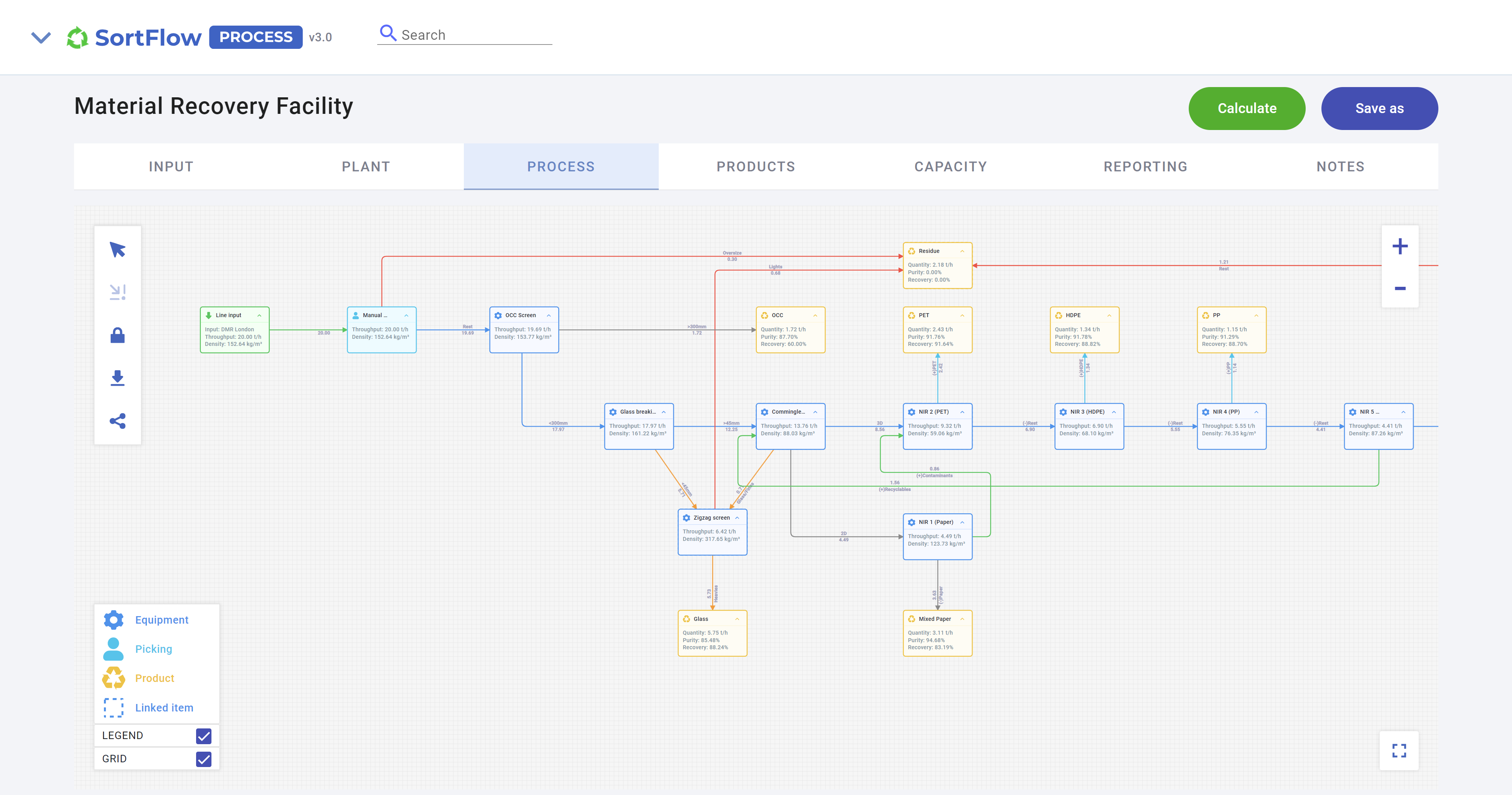
To support MRFs in this transition, mass balance modelling plays a pivotal role. This provides a comprehensive view of the waste sorting process, offering critical insights that can drive efficiency and strategic planning.
Improving Efficiency: By mapping the flow of materials through waste sorting processes, mass balance models can identify inefficiencies and bottlenecks. This allows MRFs to optimise operations, refine sorting sequences, and maximise throughput, thereby boosting overall recycling efficiency.
Aiding in Decision-Making and Strategic Planning: mass balance modelling of sorting operations is needed for strategic planning, allowing MRFs to simulate various operational scenarios. It enables informed decision-making regarding investments in new technologies, ensuring facilities are well-prepared to adapt to the evolving recycling landscape.
SortFlow Process: Leading the Way
SortFlow Process is a pioneering mass-balance modelling application that is setting new standards in waste sorting processes. Trusted by leading companies across the UK, Europe, and North America, SortFlow Process empowers MRFs to navigate the complexities of Simpler Recycling effectively. For more information on SortFlow Process, visit their product page. To experience its capabilities firsthand, book a demo.
As the UK moves towards a more sustainable and efficient waste management system, the Simpler Recycling initiative stands as a testament to the country’s commitment to environmental stewardship and innovation. Through strategic investments and technological advancements, MRFs are set to play a crucial role in realising the full potential of this transformative initiative.
SortFlow Limited, 2024
